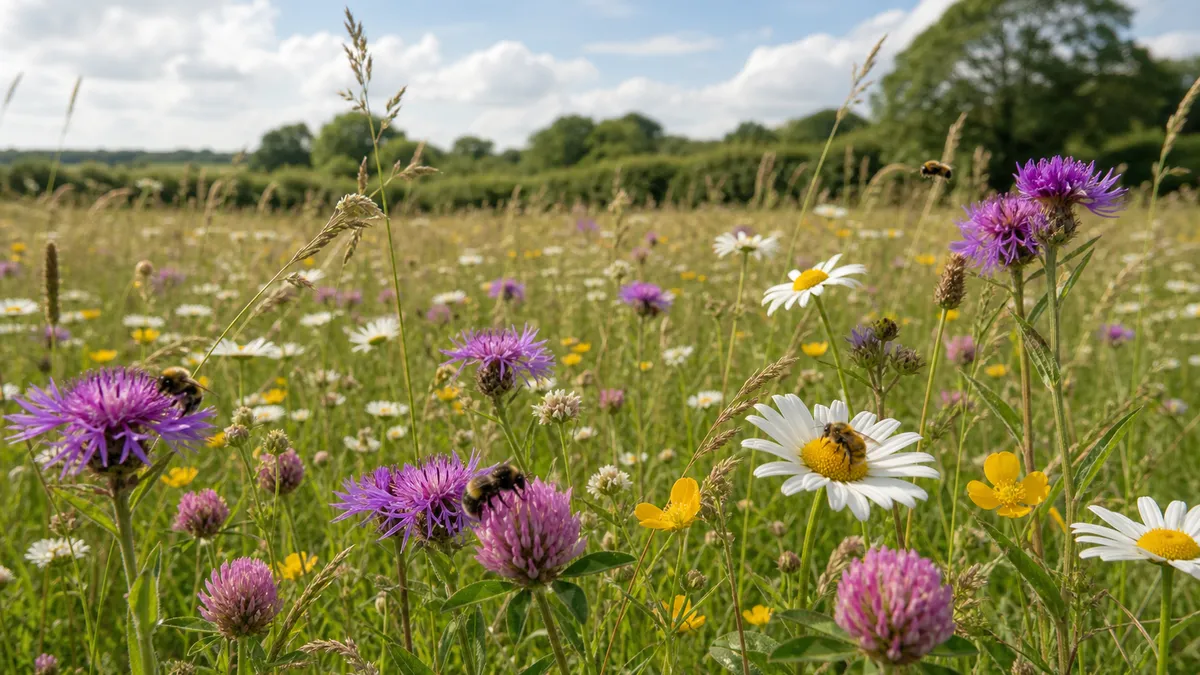
As more people start thinking about greener end-of-life choices, one question comes up again and again: is human composting better for the planet than cremation?
It is an understandable question. Cremation has become the normal choice for many families in the UK. It is familiar, widely available, often more affordable than burial, and for many people it feels simple and practical. But it is also an energy-intensive process, and as climate awareness grows, more of us are beginning to ask whether there could be gentler alternatives.
Human composting, also known as natural organic reduction, is one of those alternatives. Instead of using fire to reduce a body to ashes, it uses the natural process of decomposition to transform human remains into soil. That soil can then be returned to the earth, often through conservation, woodland restoration, habitat creation, or family land where permitted.
So, is it better for the planet? In many ways, yes, human composting has the potential to be significantly more environmentally friendly than flame cremation. But, like most environmental questions, the full answer is a little more nuanced.
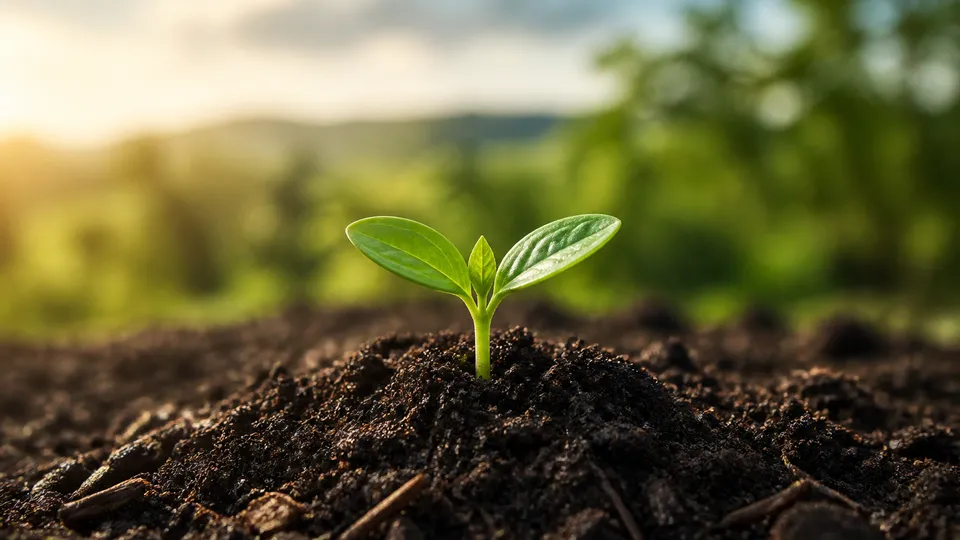
What happens during cremation?
Cremation uses very high heat to reduce a body and coffin to bone fragments, which are then processed into ashes. In the UK, most cremators are powered by gas, and the process requires high temperatures for a sustained period.
This means cremation has a direct carbon footprint. It uses fossil fuel, releases carbon dioxide, and may also produce other emissions, depending on the cremator, coffin materials, filtration systems, and what is present in the body, such as dental amalgam or medical implants.
Modern crematoria are much more regulated than they once were, and many have invested in better filtration and mercury abatement systems. That matters. The funeral sector is not standing still, and there are efforts to reduce emissions, recover heat, use cleaner technology, and make crematoria more efficient.
Still, the basic process of flame cremation remains energy-heavy. Fire is doing the work, and that work requires fuel.
What happens during human composting?
Human composting works very differently. The body is placed in a special vessel with natural organic materials such as wood chips, straw, alfalfa, or other plant matter. These materials create the right balance of carbon, nitrogen, moisture, oxygen, and structure for microbial activity.
In simple terms, microbes do what microbes have always done: they break down organic matter and turn it into soil.
The process is carefully managed. Temperature, moisture, oxygen, and time are monitored to support decomposition and reduce risks from pathogens. At the end, the remaining material is screened and cured, leaving a soil-like material that can be used in appropriate settings.
This is not casual garden composting. It is a controlled biological process, more like professional composting on a very careful, regulated scale. Where it is legal, operators must usually meet rules around facilities, handling, safety, testing, record-keeping, and final soil use.
Carbon emissions: human composting has a clear advantage
From a climate point of view, cremation's biggest drawback is that it burns fuel. A typical gas cremation in the UK is often estimated to produce over 100 kg of CO2 equivalent, with some wider lifecycle estimates placing the figure higher depending on what is included.
Human composting does not require the same high-temperature combustion. It may still need electricity, equipment, transport, buildings, staff, and processing, so it is not carbon-free. No funeral option is impact-free. But because it avoids the central act of burning fossil fuel for cremation, its direct emissions are generally expected to be lower.
There is another important difference: human composting keeps organic material in the biological cycle. Cremation releases much of the body's carbon into the atmosphere. Composting transforms the body and accompanying plant materials into a stable soil-like material. Some of that carbon can remain in the soil, especially if the soil is used in conservation, woodland, meadow, or habitat restoration.
This does not mean human composting magically "solves" carbon emissions. The amount of carbon involved in one funeral is small compared with a person's lifetime footprint. But symbolically and practically, it moves death care away from combustion and towards regeneration.
That is a meaningful shift.
Air pollution and emissions
Cremation is not only about carbon dioxide. It can also involve pollutants such as nitrogen oxides, particulates, dioxins, and mercury. Mercury is especially associated with dental amalgam fillings, although abatement technology can reduce emissions significantly.
Modern regulation has improved this picture, and many crematoria now use filtration and abatement systems. Even so, cremation remains an industrial combustion process. Human composting avoids combustion altogether, which means it avoids many of the air-emission issues associated with burning.
This is one of the strongest environmental arguments for natural organic reduction. It does not need a chimney. It does not burn a coffin. It does not send smoke or combustion gases into the atmosphere.
Of course, composting has its own environmental responsibilities. Facilities must manage odour, biosecurity, pests, leachate, soil testing, and appropriate use of the final material. A badly managed composting process would not be acceptable. But when properly regulated and professionally run, it is a very different environmental model from cremation.
Energy use
Cremation requires intense heat. Human composting relies on biological heat created by microbial activity. That is a huge difference.
Composting systems may still use energy for ventilation, monitoring, turning, moving vessels, heating buildings, running equipment, and transporting materials. But the main transformation is powered by decomposition rather than fossil fuel combustion.
This makes human composting particularly interesting in a future where the UK is trying to reduce gas dependency and decarbonise buildings, transport, agriculture, and industry. Crematoria can become more efficient, and some may eventually move towards electric or hybrid technologies, but the standard model still has a substantial energy demand.
Human composting starts from a lower-energy principle: support nature to do what nature already does.
Land use: not as simple as burial versus cremation
One reason cremation became popular in the UK is land pressure. Traditional burial can require long-term grave space, and in some areas burial land is limited or expensive. Cremation avoids that issue.
Human composting also avoids the need for a permanent grave in the traditional sense. The soil produced does need to go somewhere, but it does not require a cemetery plot for each person. It could potentially support woodland, conservation land, orchards, memorial gardens, rewilding projects, or other carefully managed landscapes.
This is where human composting becomes more than a disposal method. It can become a form of ecological stewardship.
Instead of asking, "Where do we put the body?" it asks, "How can this life return nutrients to a living place?"
That is a very different relationship with land.
However, the final use of the soil matters enormously. If human composting becomes legal in the UK, there will need to be clear rules about where the soil can be used, how it is tested, whether families can take it home, whether it can be used on food-growing land, and how conservation sites manage it responsibly.
The planetary benefit depends not only on the process, but on the aftercare.
Soil creation and ecological benefit
The most beautiful environmental argument for human composting is also the simplest: it creates soil.
Healthy soil is not just "dirt". It is a living system full of microbes, fungi, organic matter, minerals, insects, roots, and water. Soil supports plants, stores carbon, filters water, cycles nutrients, and underpins almost all terrestrial life.
Cremation produces ashes. These can be scattered or buried, and for many families they hold deep emotional meaning. But ashes are not the same as compost. Cremated remains are usually highly alkaline and do not provide the same living organic matter that soil ecosystems need.
Human composting produces a material designed to return organic matter to the earth. Used well, it could support trees, wildflowers, hedgerows, woodland restoration, or habitat creation. This is where the process moves from "lower impact" to "potentially regenerative".
That word matters. A lower-impact funeral does less harm. A regenerative funeral may also do some good.
What about coffins and funeral choices?
The environmental impact of any funeral is not only about the method used for the body. It also includes the coffin, transport, flowers, embalming, clothing, memorial products, food, travel by mourners, and the ongoing maintenance of a grave or memorial site.
A simple cremation with a locally made cardboard coffin and a small gathering may have a lower footprint than a highly elaborate funeral involving long-distance travel, imported flowers, hardwood coffins, and multiple vehicles.
Likewise, human composting could be made more or less sustainable depending on how it is offered. Are materials locally sourced? Is the facility powered by renewable energy? How far is the body transported? What happens to the soil? Is the process transparent and well regulated?
This is why it is helpful not to think in overly tidy labels. "Cremation" is not one single environmental footprint. "Human composting" will not be either. The details matter.
Is human composting available in the UK?
At the moment, human composting is not available as a mainstream regulated funeral option in the UK. However, new funerary methods are being actively discussed, including natural organic reduction and alkaline hydrolysis, sometimes called water cremation.
The legal position is evolving. In England and Wales, the Law Commission has examined how new funerary methods could be regulated in future. This is important because families, funeral providers, local authorities, environmental regulators, and faith communities all need clarity.
For human composting to become available, the UK would need a proper framework covering licensing, facilities, dignity, identity tracking, public health, environmental protection, soil testing, consumer rights, and what families can and cannot do with the resulting soil.
That may sound like a lot of rules, but it is exactly what would help build public trust. If human composting is to be accepted, people need to know it is safe, respectful, traceable, and environmentally sound.
Is cremation still a reasonable choice?
Yes. This is important to say.
Many families choose cremation for good reasons. It may reflect religious beliefs, family tradition, cost, availability, simplicity, or the wishes of the person who has died. For some, ashes offer comfort because they can be kept, scattered, divided among relatives, or taken to a meaningful place.
Environmental conversations around funerals should never become a way to make grieving families feel guilty. People make decisions at a difficult time, often with limited options. In the UK right now, human composting is not yet widely available, so cremation remains one of the main choices.
The better question is not, "Was cremation bad?" but, "Can we create more choices for the future?"
And the answer is yes.
So, is human composting better for the planet?
In most environmental comparisons, human composting appears to have clear advantages over flame cremation. It avoids high-temperature fossil fuel combustion, reduces direct air emissions, uses natural decomposition rather than fire, and creates a soil-like material that can support ecological restoration.
Its greatest strength is that it changes the story. Cremation turns the body into ash through heat. Human composting returns the body to the living world through soil.
That said, the real environmental benefit depends on how the process is regulated and delivered. A well-run natural organic reduction facility using renewable energy, local materials, careful monitoring, and conservation-focused soil use could be a genuinely greener option. A poorly regulated system would risk losing public trust and environmental credibility.
For the UK, this is a moment of possibility. We have a chance to ask what kind of funeral choices belong in a climate-conscious, nature-depleted world. More people want end-of-life options that feel gentle, honest, practical, and connected to the earth.
Human composting will not be right for everyone. No funeral choice ever is. But for those who want their final act to nourish soil, trees, and future life, it offers something deeply powerful.
Not just a lower-carbon goodbye.
A return.