When someone dies, the focus is often, understandably, on grief, ceremony, and saying goodbye. Families gather. Stories are shared. Practical decisions are made quickly, sometimes in a blur. There are forms to complete, funeral arrangements to organise, and choices to make at a time when many people feel least able to make them.
But beneath all of this sits a quieter question: what kind of relationship do we want death to have with the living world?
For generations, death has been treated mainly as a private family event or a religious and cultural rite. It is those things, of course. But death is also ecological. Every human body is part of nature. We are made from the same elements as the soil, trees, rivers, fungi, and flowers around us. Our lives are supported by the earth, and eventually our bodies return to it in one form or another.
Ecological end-of-life choices invite us to think about that return more consciously. They ask whether funerals can do more than mark an ending. Could they also help restore land, support biodiversity, protect soils, plant trees, and create places of memory that continue to be cared for over time?
This is where the ideas of soil, memory, and stewardship come together.
Death as part of the living cycle
Modern life can make death feel separate from nature. Many people die in hospitals or care homes. Bodies are moved into professional care. Funerals often take place in formal buildings, with carefully managed services and polished rituals. There can be beauty and comfort in this, but it can also create distance.
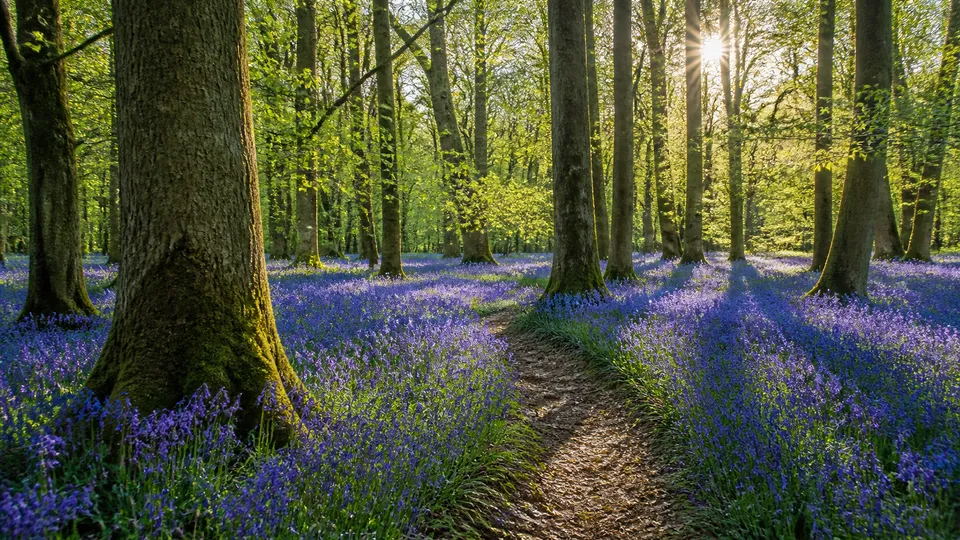
Nature works differently. In a woodland, nothing is wasted. A fallen branch becomes habitat for beetles, fungi, mosses, and microbes. Leaves fall and feed the soil. Dead trees become nurse logs for new seedlings. Nutrients move through the landscape, passing from one form of life into another.
This cycle is not sentimental. It is practical, ancient, and deeply intelligent.
Ecological end-of-life choices recognise that human beings are not outside this cycle. We are part of it. Whether through natural burial, human composting, woodland memorials, conservation cemeteries, or other nature-based approaches, these choices can help us see death as a return, not simply a disappearance.
That does not remove grief. Nothing does. But it can give grief somewhere to go. A tree to visit. A meadow to walk through. A patch of restored land to watch change through the seasons. A place where memory is held not only in stone, but in roots, birdsong, soil, and shade.
What do we mean by ecological end-of-life choices?
Ecological end-of-life choices are funeral and memorial options that aim to reduce environmental harm and, where possible, support nature.
They may include:
- Natural burial in a meadow, woodland, or conservation burial ground
- Biodegradable coffins, shrouds, and urns
- Avoiding embalming fluids where possible
- Planting trees or restoring habitats as memorials
- Choosing local, seasonal, low-impact flowers
- Reducing transport and unnecessary materials
- Supporting land managed for wildlife and long-term ecological care
- Future options such as human composting or natural organic reduction, where legal and regulated
The same care, with the earth included
The details vary depending on the country, the law, the funeral provider, and the site. But the general aim is the same: to make death care gentler on the earth and more connected to the living landscape.
This does not mean every ecological funeral has to look rustic or unconventional. It can still include music, readings, faith, family traditions, flowers, formal dress, tears, laughter, and all the emotional richness of any funeral. The difference is that the environmental impact is considered as part of the care.
Soil: the quiet foundation of life
Soil is often overlooked because it sits beneath our feet, doing its work quietly. But healthy soil is one of the foundations of life on earth.
It holds water. It stores carbon. It supports plants, fungi, bacteria, insects, and countless microscopic organisms. It helps grow our food. It filters water. It anchors trees. It is not just "dirt"; it is a living system.
When we talk about ecological funerals, soil matters both practically and symbolically.
Practically, soil is where decomposition happens. In natural burial, the body is returned to the ground in a way that allows natural processes to take place. In human composting, where available, the body is transformed into soil-like material through a managed process involving plant materials, oxygen, moisture, and microbes.
Symbolically, soil represents return, humility, nourishment, and continuity. To become part of the soil is to become part of future life. For many people, this offers a profound sense of comfort.
There is something deeply moving about the idea that the body is not simply gone, but changed. The person we loved is no longer present in the way we knew them, but their physical matter can become part of a tree, a wildflower meadow, a hedgerow, or a restored landscape.
The language of soil is gentle but powerful. It does not deny death. It places it within a larger story.
Memory held in the landscape
Most cultures create places for memory. Graves, headstones, memorial benches, plaques, ashes scattered in favourite places, trees planted in remembrance - all of these help families connect love with place.
A place gives grief a physical anchor. It offers somewhere to visit on anniversaries, birthdays, quiet Sundays, or days when the missing feels especially sharp. It says: this person mattered here.
Ecological memorials can deepen this relationship by making the place itself part of the legacy.
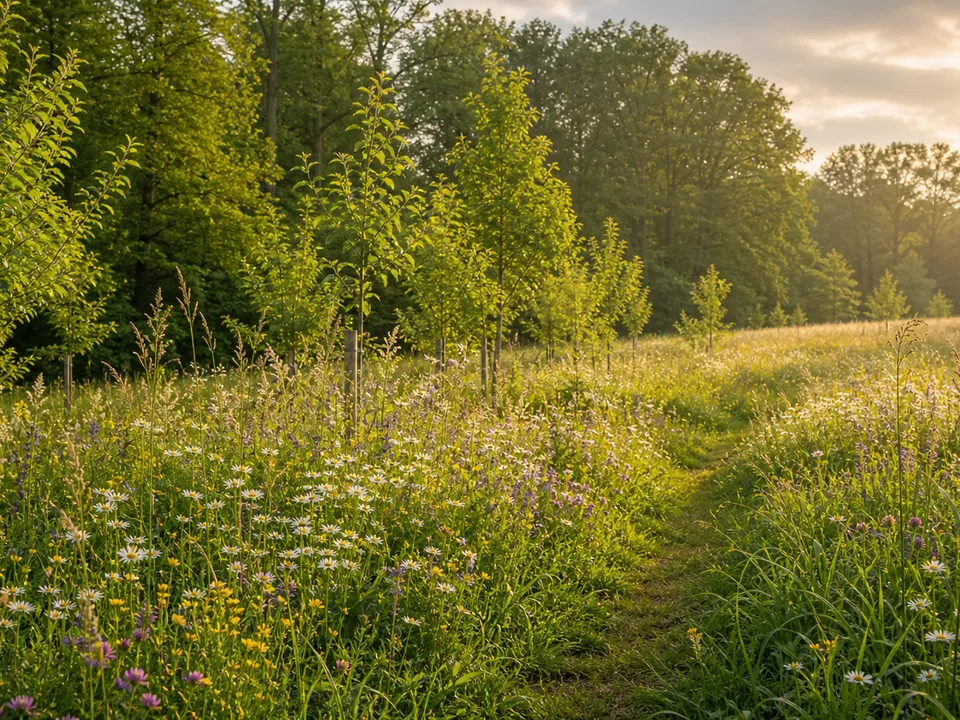
A natural burial ground might become a wildflower meadow alive with bees and butterflies. A woodland burial site might grow into a young forest, with native trees planted over time. A conservation cemetery might protect land from development and manage it for wildlife. A memorial orchard might feed pollinators, birds, and local communities.
In these places, memory is not static. It changes with the seasons.
In spring, there may be blossom, birdsong, and fresh green leaves. In summer, long grasses, bees, and warm soil. In autumn, seed heads, fungi, and golden light. In winter, bare branches, frost, and quiet.
For families, this can be comforting. The memorial is not frozen in time. It grows, rests, flowers, decays, and renews itself. It mirrors the rhythms of grief, which also changes over time.
Some days grief is raw and immediate. Other days it becomes softer, woven into daily life. A living landscape can hold both.
Stewardship: care that continues
One of the most beautiful ideas within ecological death care is stewardship.
Stewardship means looking after something with care, responsibility, and respect. It is not about ownership in a possessive sense. It is about guardianship. We care for land because it holds life, memory, and meaning.
When a burial ground, memorial woodland, or conservation site is managed well, it can become more than a funeral location. It can become a long-term ecological project.
This might involve:
- Planting native trees and hedgerows
- Creating wildflower meadows
- Restoring ponds or wetlands
- Managing grassland for pollinators
- Protecting old trees and deadwood habitats
- Avoiding pesticides and unnecessary chemicals
- Supporting birds, bats, insects, fungi, and soil life
- Monitoring biodiversity over time
- Inviting families into seasonal care days or remembrance events
Let love become care
In this way, remembrance becomes active. Families are not only visiting a grave; they may be helping care for a place. They may plant bulbs, join a meadow-cutting day, walk a woodland path, or support habitat restoration in memory of someone they loved.
This kind of long-term care can be deeply healing. Grief often leaves people asking, "What do I do with all this love now?" Stewardship offers one answer: let it become care.
Care for a tree. Care for soil. Care for a place. Care for the future.
From individual loss to collective benefit
A funeral begins with one person's death, but ecological end-of-life choices can create benefits that reach beyond one family.
When land is protected for natural burial or conservation, it can provide habitat for wildlife. When trees are planted and properly cared for, they can offer shade, shelter, carbon storage, beauty, and biodiversity. When meadows are restored, they can support pollinators and improve soil health. When families choose biodegradable materials, they reduce the amount of plastic, metal, concrete, and chemical inputs associated with some conventional funeral practices.
These choices do not make grief easier in a simple way. But they can help families feel that something good is being carried forward.
A person's final act can become part of a wider ecological story.
This matters at a time when many people are anxious about climate change, biodiversity loss, soil degradation, and the disconnection between humans and nature. Ecological funeral choices will not solve these problems on their own. But they are part of a broader cultural shift: a move towards seeing ourselves as participants in nature rather than separate from it.
Death care is one of the most intimate areas of life. When environmental thinking enters this space, it does so not as a trend, but as a values-based choice. It says: even at the end, we can act with care.
The importance of place
Place matters.
A woodland in Devon will feel different from a meadow in Yorkshire, a coastal burial ground in Wales, or a restored wetland in Scotland. Each landscape has its own ecology, history, weather, soil, plants, and stories.
Ecological end-of-life choices work best when they are rooted in the local landscape. This means thinking carefully about what belongs there. Which trees are native to the area? What kind of soil is present? What habitats are already thriving? What species need support? How can the site be managed in a way that feels natural rather than forced?
A good ecological memorial site should not simply plant trees for the sake of it. The right tree in the right place can be wonderful. The wrong tree in the wrong place can create problems. A wildflower meadow may be perfect for one site, while woodland regeneration may suit another. In some places, grassland, scrub, hedgerow, orchard, wetland, or heathland might be more ecologically appropriate than trees.
This is where conservation knowledge matters. Ecological death care is not only about good intentions. It needs thoughtful land management.
The best sites combine emotional sensitivity with ecological literacy. They understand that a memorial landscape must serve both people and nature.
Family connection across generations
One of the quiet strengths of ecological memorial places is that they can connect generations.
Children may find a woodland or meadow easier to understand than a formal cemetery. They can see insects, leaves, flowers, birds, and seasonal change. They can ask questions. They can be told, gently, that someone they loved is part of this place now.
This does not need to be explained in a heavy or frightening way. For many children, nature already offers a language for change. Leaves fall. Seeds grow. Caterpillars become butterflies. Trees lose their leaves and grow them again. Death is still sad, but it is not outside the pattern of life.
For adults too, these places can become part of family tradition. A yearly walk. A picnic beneath a growing tree. A visit when bluebells appear. A quiet moment at the edge of a meadow.
Over time, the place gathers stories.
Your grandmother loved this view.We planted this tree the spring after he died.She always liked the sound of blackbirds.This meadow was bare once. Look at it now.
Rooted memory
In this way, memory becomes rooted. Not only in words, but in place.
Human composting and the future of ecological death care
Human composting, also known as natural organic reduction, adds another layer to this conversation.
Where natural burial returns the body directly to the earth, human composting transforms the body into soil through a managed process. That soil can then be used to support planting, habitat restoration, or conservation land, depending on local laws and regulations.
For people interested in ecology, this can feel like a very direct form of return. The body becomes soil, and the soil nourishes life.
In the UK, human composting is not currently available as a mainstream funeral option, but it is increasingly being discussed as part of the future of funeral care. If it becomes legal and properly regulated, it could offer another meaningful option for people who want their death to support the living world.
As with all funeral choices, care will be needed. Families will need clear information. Providers will need strong regulation. The use of the resulting soil will need thoughtful rules. Public trust will depend on dignity, safety, transparency, and ecological responsibility.
Done well, human composting could become part of a wider movement towards regenerative death care: an approach that sees the end of life not as waste management, but as ecological return.
Avoiding greenwashing
As interest in greener funerals grows, it is important to be honest.
Not every funeral described as "eco" is equally beneficial for nature. Planting a tree is not automatically good if it is planted in the wrong place, neglected, or used to distract from other environmental impacts. A biodegradable coffin may still have travelled a long distance or been made from materials that were not sourced responsibly. A memorial product may sound natural but still involve unnecessary manufacturing, packaging, or transport.
Ecological death care should be thoughtful, not just marketable.
Families may want to ask questions such as:
- Is this coffin, shroud, or urn fully biodegradable?
- Where were the materials sourced?
- Is embalming necessary?
- How is the burial or memorial land managed?
- Are native species used?
- Who looks after the site long term?
- Is there a conservation plan?
- How is biodiversity monitored?
- What happens if the organisation stops operating?
Simple, transparent, and place-based
These questions are not about being difficult. They are about making sure the choice genuinely reflects the values behind it.
The most meaningful ecological funeral choices are usually simple, transparent, and place-based.
Grief, beauty, and responsibility
There is a tenderness at the heart of ecological death care.
It recognises that grief needs beauty. Not glossy perfection, but real beauty: trees moving in the wind, soil after rain, birdsong in the morning, fungi on old wood, the first flowers of spring.
It also recognises that love can become responsibility. The person who has died cannot be brought back, but something can still be tended in their name.
A landscape can be protected. A tree can be planted. A meadow can be restored. A patch of soil can be cared for. A family can return, year after year, and see life continuing.
This is not about pretending death is easy. It is not. Death can be devastating, disorientating, and unfair. But ecological choices can offer a way to place that pain within something larger and life-giving.
They can help families say: this life mattered, and it will continue to matter through the care we give to this place.
A lasting legacy in living soil
Soil, memory, and stewardship are deeply connected.
Soil reminds us that life is cyclical. Memory reminds us that love continues beyond death. Stewardship gives us a way to act on that love by caring for the living world.
Ecological end-of-life choices bring these ideas together. They offer a different way of thinking about funerals - not only as ceremonies of farewell, but as acts of return, restoration, and responsibility.
For some families, this might mean a natural burial beneath native trees. For others, it might mean choosing a biodegradable coffin, supporting a conservation burial ground, planting a memorial orchard, or, in the future, choosing human composting where it is legally available.
The details will vary. The heart of it is the same.
We belong to the earth. We are shaped by place. And when we die, there is the possibility - if we choose it - of giving something back.
In that giving back, memory becomes more than a name. It becomes shade, blossom, birdsong, habitat, and soil.
A life loved.A place cared for.A legacy still growing.